Changchun Realpoo Photoelectric Co.,Ltd.

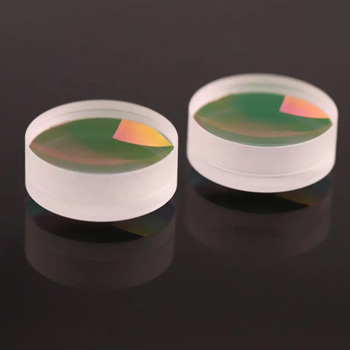
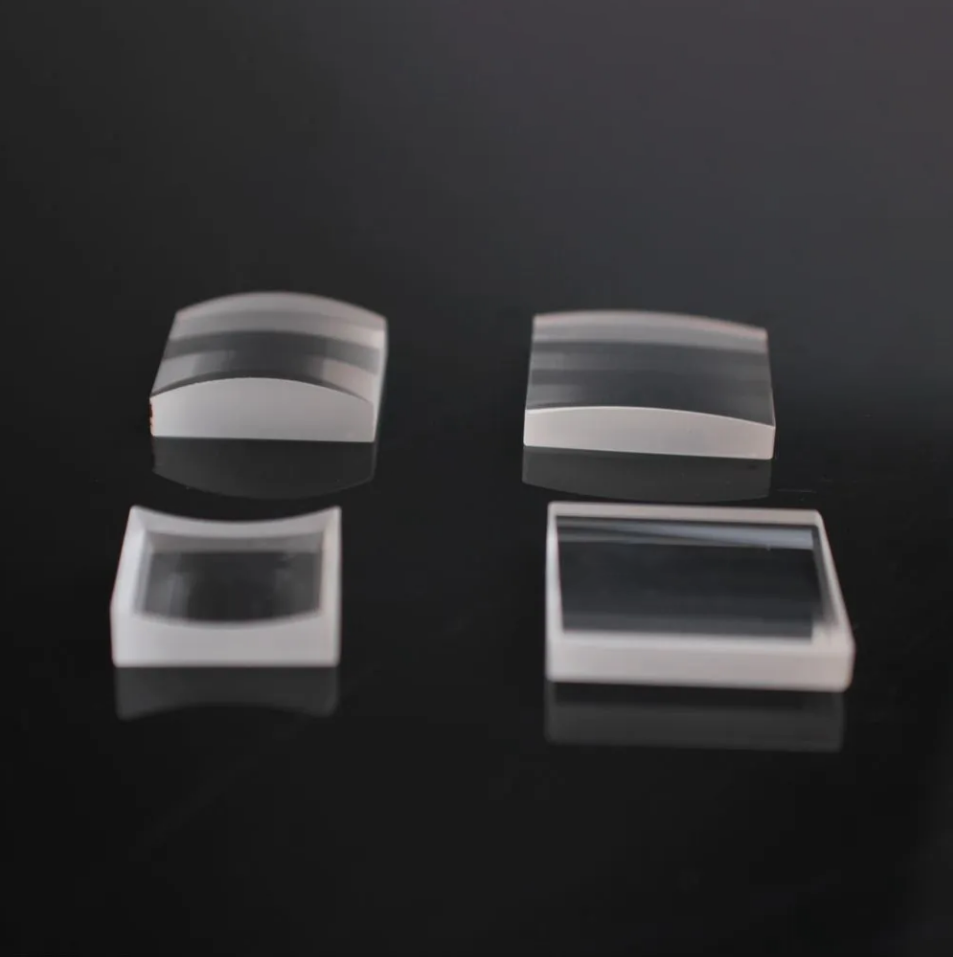
Aspherical lensis an optical lens whose surfaces are shaped as portions of a sphere. These lenses are typically characterized by their ability to converge or diverge light depending on their curvature. Spherical lenses are commonly used in many optical systems, including eyeglasses, cameras, telescopes, microscopes, and optical instruments.
Key Features of Spherical Lenses:
-
Shape:
- Spherical lenses have surfaces that are segments of spheres, meaning they have uniform curvature across the lens.
-
These lenses are classified based on their curvature and how they focus light.
- Plano-convex lens: One surface is flat (plano), and the other is convex (curved outward).
- Plano-concave lens: One surface is flat, and the other is concave (curved inward).
- Biconvex lens: Both surfaces are convex (curved outward).
- Biconcave lens: Both surfaces are concave (curved inward).
- Focal Length: The focal length of a spherical lens is the distance between the lens and the point where it focuses light. A lens's curvature directly affects its focal length—greater curvature results in a shorter focal length.
-
Convergence or Divergence:
- Converging Lens (Biconvex and Plano-convex): These lenses focus parallel light rays to a single point, creating a real image. They are commonly used in magnifying glasses and in correcting hyperopia (farsightedness).
- Diverging Lens (Biconcave and Plano-concave): These lenses spread parallel light rays apart. They are used in optical systems like telescopes and in correcting myopia (nearsightedness).
- Material: Spherical lenses can be made from various optical materials, including glass, plastic, and other transparent materials, depending on the specific needs of the optical system (e.g., UV, visible, or infrared transparency).
Applications of Spherical Lenses:
-
Eyeglasses:
- Converging lensesare used for people with hyperopia (farsightedness) to bring light to focus on the retina.
- Diverging lensesare used for people with myopia (nearsightedness) to spread light before it reaches the retina, thus focusing it correctly.
-
Cameras and Optical Instruments:
- Spherical lenses are used in camera lenses and microscopes to focus light onto the image sensor or film. They can be part of more complex lens systems used for magnification or focusing in these instruments.
-
Magnifying Glasses:
- Abiconvex spherical lensis used in magnifying glasses to enlarge objects by converging light and focusing it on the eye.
-
Telescopes and Binoculars:
- Spherical lenses are used in telescopes to gather light from distant objects and focus it to create an image. A combination of convex and concave spherical lenses can also be used to control light paths.
-
Projectors:
- In optical projectors, spherical lenses help to focus light from a source onto a screen.Convex lensesare used to focus light, whileconcave lensesmay be used to expand or spread light.
-
Lasers:
- In laser systems, spherical lenses are used to shape the laser beam, either focusing it to a small point (converging) or spreading it out (diverging), depending on the application.
-
Optical Coating Systems:
- Spherical lenses may be coated with materials that reduce reflection and increase light transmission, which is important in applications like lasers, microscopes, and high-quality cameras.
Optical Characteristics:
- Refraction: Light passing through a spherical lens bends (refracts) due to the lens's curvature. The degree of bending depends on the lens's shape and the refractive index of the material.
- Focusing Power: The focusing power of a spherical lens is determined by its curvature. The more curved the lens, the shorter the focal length, which makes the lens more powerful at focusing light.
- Aberrations: Spherical lenses may producespherical aberration, which occurs when light rays entering the lens at different points do not converge at the same focal point. This is a result of the lens's spherical shape. To minimize this,aspherical lensesmay be used in more advanced optical systems.
Types of Spherical Lenses:
- Plano-Convex Lens: A lens with one flat surface and one convex (outward-curved) surface. These lenses are used to focus light into a single point. They are often used in collimating light or in systems where one side must remain flat for alignment purposes.
- Plano-Concave Lens: A lens with one flat surface and one concave (inward-curved) surface. These lenses are used to diverge light and create virtual images. They are often used in systems where light needs to be spread or in applications like laser optics.
- Biconvex Lens: A lens with two convex surfaces that converges light to a single point. These lenses are used to magnify objects and are common in magnifying glasses, microscopes, and camera lenses.
- Biconcave Lens: A lens with two concave surfaces that diverge light. These lenses are used in optical systems to spread light over a larger area, and they are typically used for myopia correction.
Advantages of Spherical Lenses:
- Simplicity: Spherical lenses are relatively simple to manufacture compared to other complex optical elements, such as aspheric lenses.
- Versatility: They are widely used in a variety of applications, from corrective eyewear to high-end optical systems like telescopes and microscopes.
- Affordable: Due to their simple design, spherical lenses are often more affordable compared to other specialized lenses.
Conclusion:
Spherical lenses are fundamental components in optical systems, providing the ability to converge or diverge light based on their curvature. They are versatile and are used in a wide range of applications, from eyeglasses to high-precision scientific instruments. Understanding the different types of spherical lenses and their uses can help optimize their performance in any optical system.