Changchun Realpoo Photoelectric Co.,Ltd.

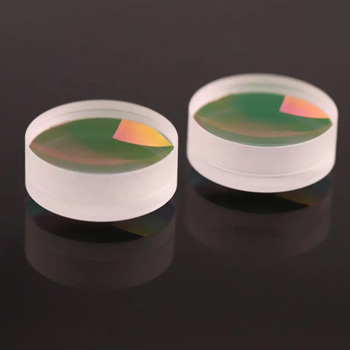
A collimator lens is an optical lens designed to focus light into a parallel beam, minimizing the divergence of the light. The primary purpose of a collimator lens is to convert divergent light from a point source (such as a laser) into a collimated (parallel) beam, which is essential in many optical systems. Collimator lenses are commonly used in laser systems, optical instrumentation, fiber optics, and other applications that require a precise, controlled light beam.
Key Features of Collimator Lenses:
-
Parallel Light Beam:
- The primary function of a collimator lens is to transform light from a point source into a parallel beam of light. This is crucial in systems where the light needs to travel a long distance without diverging.
-
Lens Shape:
- Typically, a collimator lens is a plano-convex lens or concave lens, designed specifically to focus light coming from a point source into a parallel beam.
- Convex lenses are most commonly used as collimator lenses for laser systems or optical systems where light needs to be focused into a straight beam.
-
Collimation Length:
- The effectiveness of the collimator lens depends on the distance between the light source and the lens, as well as the focal length of the lens. The focal length of the lens determines how far the collimated light will travel before it begins to diverge.
-
Material:
- Collimator lenses are typically made from glass (such as BK7, fused silica, or other optical glasses) or quartz depending on the wavelength range required (UV, visible, or infrared).
-
Wavelength Range:
- Collimator lenses are often selected based on the wavelength of light they need to collimate. For instance, UV collimator lenses are made from quartz to transmit ultraviolet light, while visible and infrared lenses may be made from different types of glass.
Applications of Collimator Lenses:
-
Laser Systems:
- Collimator lenses are widely used in laser systems to convert the light emitted from a laser diode or other light source into a parallel beam. This collimated beam is crucial for long-distance light transmission without significant spreading or divergence.
-
Fiber Optic Systems:
- In fiber optics, collimator lenses are used to focus light into optical fibers. The light must be collimated to ensure efficient coupling into the fiber core, which allows light to travel through the fiber with minimal loss.
-
Telescope and Optical Instruments:
- Telescope systems use collimator lenses to focus light from distant objects (such as stars) into a parallel beam, allowing the light to be collected and focused onto a detector or eyepiece.
- In microscopes, collimator lenses are used to provide an even, collimated light source for optimal imaging.
-
Imaging Systems:
- In imaging systems, collimator lenses are used to ensure that light travels in a controlled, parallel path, which is essential for high-quality image formation and resolution in cameras, projectors, and other optical devices.
-
Spectrometers and Spectrophotometers:
- Spectrometers use collimator lenses to direct light into the system at a consistent, parallel angle. This is crucial for accurate wavelength separation and analysis of the spectrum.
-
Laser Cutting and Engraving:
- In laser cutting and engraving systems, collimator lenses are used to ensure that the laser beam is focused into a precise, parallel beam, which is necessary for clean and accurate cutting or engraving.
-
Barcode Scanners:
- Barcode scanners often use collimator lenses to project a laser beam across a barcode. The parallel beam ensures that the barcode is scanned with high precision.
-
Measurement Systems:
- In optical measurement systems, collimator lenses are used to create a collimated beam of light that is directed at an object. The light is reflected back to a detector, where it is analyzed to determine the distance or position of the object.
Optical Characteristics:
-
Collimation:
- The primary characteristic of a collimator lens is its ability to collimate light, which means making the light rays parallel. The lens achieves this by using its curvature and focal length to bend the light so that it no longer diverges.
-
Focal Length:
- The focal length of the collimator lens determines how far from the lens the collimated light will remain parallel. A shorter focal length typically produces a larger divergence angle at closer distances, while a longer focal length provides a longer, more tightly focused parallel beam.
-
Aberration Control:
- Collimator lenses are designed to minimize chromatic and spherical aberrations, which can cause distortions in the collimated beam. High-quality lenses are used to ensure the light remains parallel and free of distortion over long distances.
Types of Collimator Lenses:
-
Plano-Convex Lens:
- A lens with one flat (plano) surface and one convex surface. It is most commonly used as a collimator lens, focusing light into a parallel beam.
-
Concave Lens:
- A concave lens can also be used as a collimator in systems where the goal is to diverge light or spread it across a certain area.
-
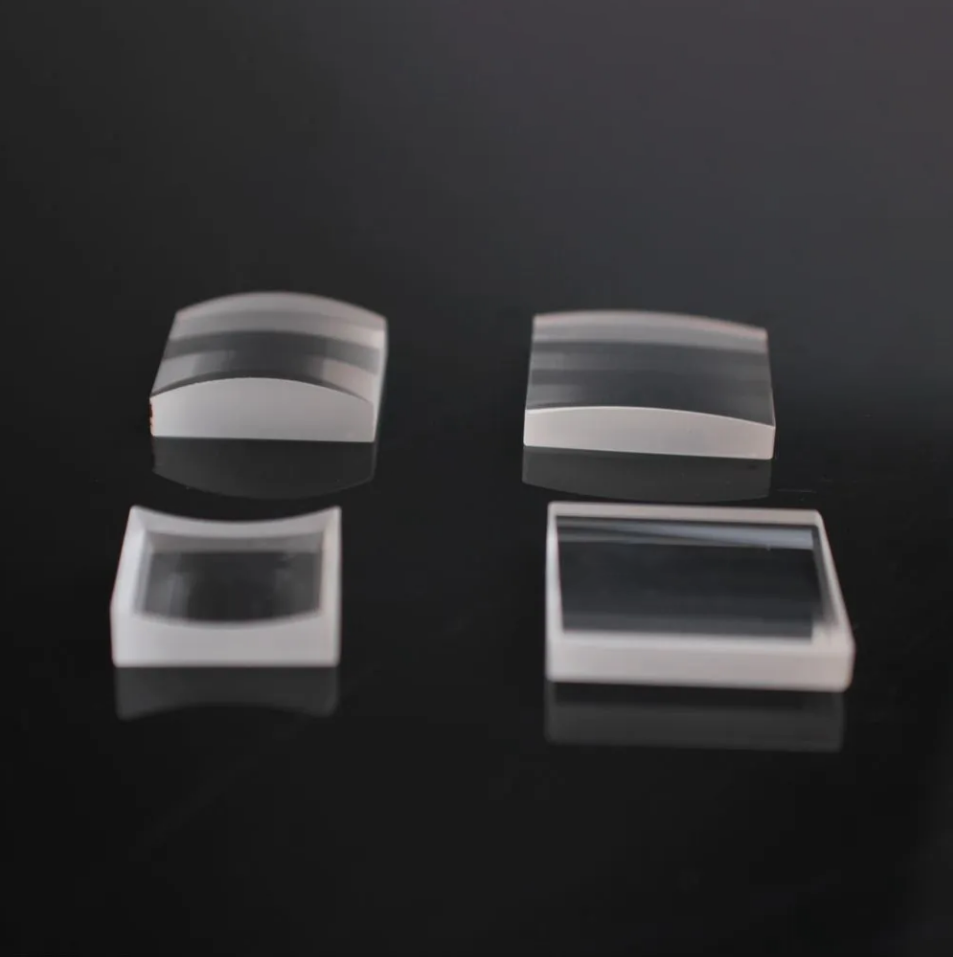
Cylindrical Collimator Lens:
- Cylindrical collimator lenses are used in applications where light needs to be collimated in one dimension only (e.g., for laser line generators or certain imaging systems).
Advantages of Collimator Lenses:
- Precise Light Control: Collimator lenses offer precise control over the divergence of light, which is essential for maintaining the quality of the light beam in systems that require long-range light transmission.
- Compact and Efficient: These lenses are compact and efficient at converting light into a parallel beam, making them ideal for systems with size or space constraints.
- Minimized Distortion: High-quality collimator lenses minimize optical distortions such as chromatic and spherical aberration, ensuring the light beam remains focused and accurate.
Conclusion:
Collimator lenses are essential components in optical systems that require precise control of light. They are used in a wide range of applications, including laser systems, fiber optics, imaging, and optical measurement systems. Their ability to convert divergent light into a parallel beam makes them indispensable in fields requiring high-precision light transmission and focus.