Changchun Realpoo Photoelectric Co.,Ltd.

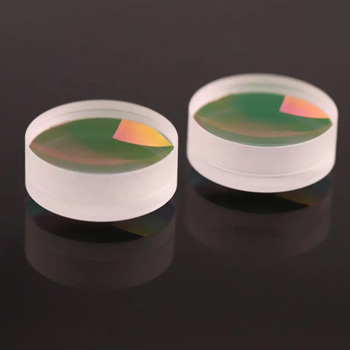
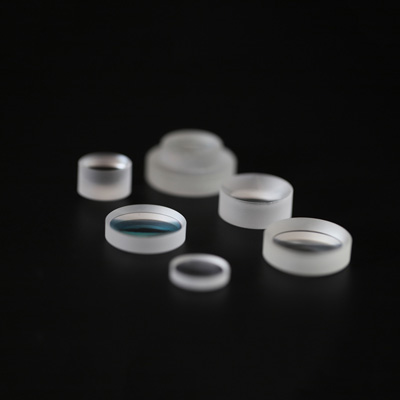
A cylindrical lens is an optical lens that has one surface shaped like a cylinder. It focuses light into a line rather than a point. Unlike spherical lenses, which focus light in all directions, cylindrical lenses focus light in only one direction. They are often used to manipulate light in specific applications where focusing in one dimension is required.
Key Features of Cylindrical Lenses:
- Shape: A cylindrical lens has a cylindrical shape, which means that it only focuses light along one axis. This makes it different from spherical lenses, which focus light in both horizontal and vertical directions.
- Focus: Cylindrical lenses focus parallel light rays into a line rather than a single point, making them ideal for applications requiring one-dimensional focus.
- Power: The lens has a curvature in only one direction, which means that the focal length is only affected along that axis.
- Types: They can be either positive or negative depending on the curvature of the lens surfaces. Positive cylindrical lenses focus light to form a line focus, whereas negative cylindrical lenses spread the light out into a line.
Applications of Cylindrical Lenses:
- Laser Beam Shaping: Cylindrical lenses are commonly used to shape laser beams, converting a circular laser beam into an elliptical or line-shaped beam. This is useful in applications like laser cutting, laser engraving, and laser scanning.
- Optical Systems: Cylindrical lenses are used in optical systems that need to focus or collimate light in only one dimension. For example, in optical projectors, these lenses focus light horizontally but not vertically, creating the desired projection characteristics.
- Correcting Astigmatism: Cylindrical lenses are used in the correction of astigmatism in eyeglasses. Astigmatism is caused by an irregular curvature of the eye's cornea, and cylindrical lenses help to correct this by focusing light differently in one direction.
- Image Processing: In systems like barcode scanners or optical character recognition (OCR) systems, cylindrical lenses are used to focus light onto the sensor. This helps to maintain clarity and sharpness in one dimension, essential for accurate readings.
- Spectroscopic Applications: Cylindrical lenses can be used in spectrometers and optical filters to focus light across a specific range of wavelengths or to create a line focus for diffraction measurements.
- Fiber Optic Systems: In fiber optic communication, cylindrical lenses can be used to focus light into the fiber or to collimate light in one direction, optimizing signal transmission efficiency.
Optical Characteristics:
- One-Dimensional Focusing: Unlike spherical lenses, which focus light in all directions, cylindrical lenses focus light into a single line along one axis, making them essential for line focus applications.
- Aspheric: Cylindrical lenses are often aspheric (non-spherical) in design, providing the ability to focus light more efficiently along the axis of curvature.
- Astigmatism Control: In some optical systems, cylindrical lenses help reduce or control astigmatism, allowing the system to focus light in one dimension for sharper imaging.
Types of Cylindrical Lenses:
- Plano-Cylindrical Lenses: These lenses have a flat surface on one side and a cylindrical curve on the other. They are often used for beam shaping in laser systems.
- Concave Cylindrical Lenses: These have a concave cylindrical shape, causing light to diverge in one direction. They are useful for expanding light in a single direction.
- Convex Cylindrical Lenses: These have a convex cylindrical shape, which converges light into a line focus along the cylindrical axis.
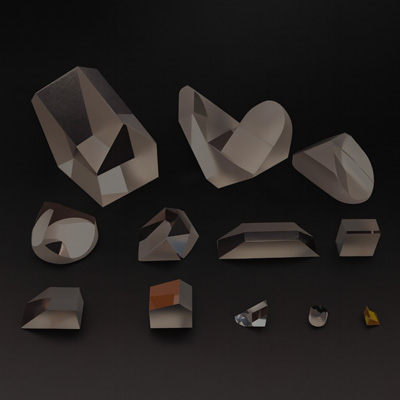
- Cylinder-Shape Prisms: A modification of cylindrical lenses used for specific applications where further optical manipulation of light is needed.
Advantages of Cylindrical Lenses:
- Precision Control: They allow for highly precise control of light in one dimension, making them ideal for laser beam shaping and other specialized applications.
- Compact and Efficient: Cylindrical lenses are compact and efficient for focusing light in systems where only one-dimensional focusing is needed.
- Cost-Effective: Due to their simple design, cylindrical lenses are often less expensive than more complex spherical lenses while still providing accurate control over light.
Conclusion:
Cylindrical lenses play an essential role in optical systems where one-dimensional light manipulation is required. They are used in laser applications, optical instruments, medical corrections, and more, offering precise control over light in specialized scenarios. Their unique ability to focus light into a line instead of a point makes them indispensable in various high-precision fields.