Changchun Realpoo Photoelectric Co.,Ltd.

A Fresnel lens is a type of lens that has been designed to be much thinner and lighter than traditional lenses, using a series of concentric grooves or ridges on its surface to focus light. The lens was named after the French physicist Auguste Fresnel, who developed the concept in the early 19th century. Unlike conventional lenses, which have a continuous, smooth surface, a Fresnel lens has a series of stepped surfaces, making it more compact and lightweight.
Key Features of Fresnel Lenses:
-
Grooved Surface:
- The most notable feature of a Fresnel lens is its stepped structure. It consists of a series of concentric grooves (or rings) that simulate the curvature of a traditional lens but in a much thinner, lightweight form. These grooves bend the light in a manner similar to a full lens.
-
Thin and Lightweight:
- Traditional lenses, especially large ones, can be heavy and bulky. Fresnel lenses, by contrast, are thin and can be made from plastic or glass, making them much lighter and easier to handle.
-
Focus:
- Fresnel lenses are capable of focusing light to a single point, just like traditional lenses. The stepped grooves redirect the light in a way that mimics the action of a thicker, more traditional lens, but with significantly reduced material and weight.
-
Design Variations:
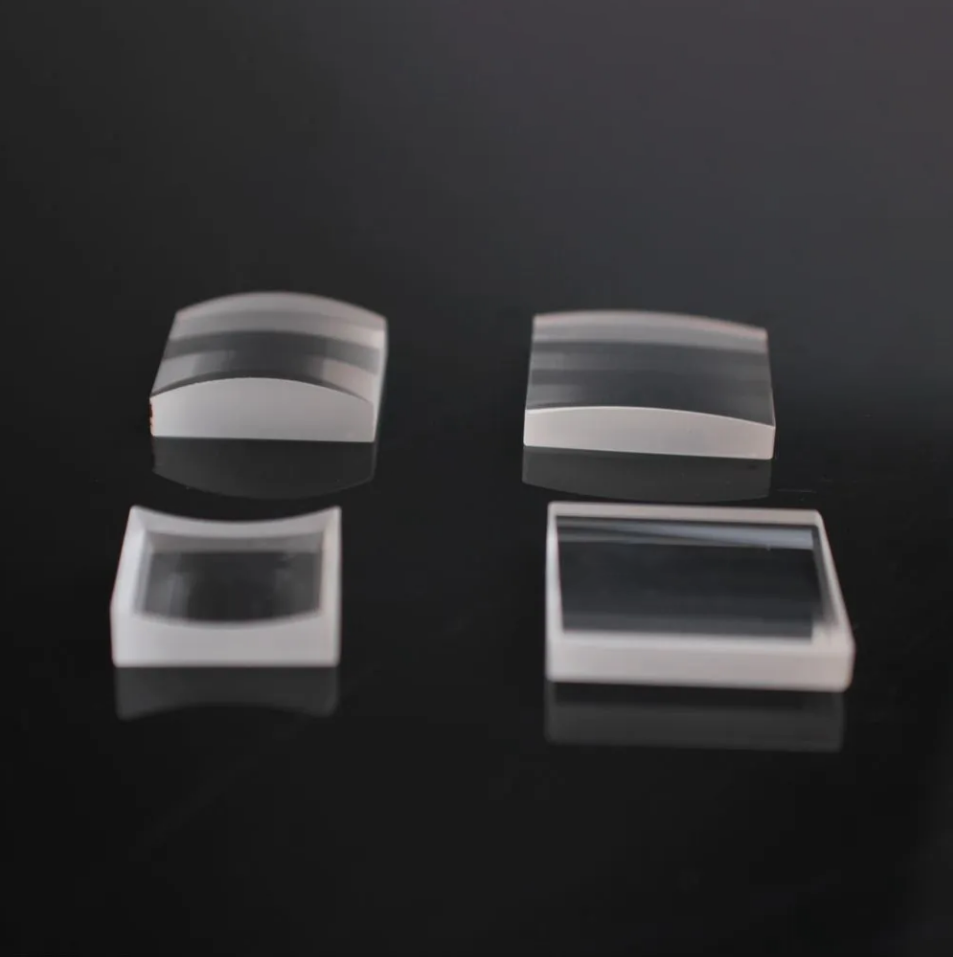
- Fresnel lenses can be made with different shapes, including planar (flat) or cylindrical versions, depending on the specific application and the light behavior desired.
Applications of Fresnel Lenses:
-
Lighthouses:
- One of the earliest and most famous uses of Fresnel lenses was in lighthouse systems. The lens would focus a beam of light over long distances, allowing ships to detect the lighthouse from far away. The use of concentric rings helped make the lens much more efficient than traditional lenses for this purpose.
-
Projection Systems:
- Fresnel lenses are used in projection systems to gather and focus light. They are commonly found in projectors, headlights, flashlights, and other light-based devices, where the lens focuses light from a light source and projects it in a specific direction or pattern.
-
Solar Concentrators:
- In solar power applications, Fresnel lenses are used as solar concentrators to focus sunlight onto a small solar panel or a photovoltaic cell. Their lightweight and compact design makes them ideal for concentrating light and increasing the efficiency of solar energy systems.
-
Optical Instruments:
- Fresnel lenses are used in a variety of optical devices, such as magnifying glasses, microscopes, and telescopes, where their lightweight nature makes them ideal for portable and handheld instruments.
-
Virtual Reality (VR):
- In virtual reality (VR) headsets, Fresnel lenses are used to magnify and focus the display screen to the viewer’s eyes. Their thin profile makes them a preferred choice for VR applications where space and weight are constraints.
-
Cameras and Imaging Systems:
- Fresnel lenses are often used in camera viewfinders, imaging systems, and scanners to control light distribution and focus.
-
LED Lights:
- Fresnel lenses are commonly used in LED lighting systems to concentrate light and direct it in specific patterns, especially in floodlights or stage lighting, where the light needs to be directed over a wide area.
-
Laser Systems:
- Fresnel lenses are used in laser systems to focus or direct the laser beam in specific applications, such as laser cutting, engraving, or optical communication.
-
Automotive Applications:
- Fresnel lenses are sometimes used in automotive headlights to focus light in a way that enhances visibility while reducing glare. They are used in both reflective and projective headlight systems.
-
Head-Up Displays (HUD):
- In head-up displays (common in aircraft, military systems, and some cars), Fresnel lenses are used to focus light from the display screen so that it can be viewed easily by the operator while keeping the system compact.
Optical Properties of Fresnel Lenses:
-
Light Transmission:
- The grooves in a Fresnel lens redirect light by refracting it. The design allows light to pass through the lens with minimal loss, making it efficient at focusing light without requiring a thick, solid lens.
-
Focal Length:
- Fresnel lenses can have a focal length similar to traditional lenses. However, since they are thinner and lighter, they achieve this without the bulk. The focal length can be adjusted based on the groove spacing and the curvature of the lens.
-
Aberrations:
- Like other lenses, Fresnel lenses can suffer from chromatic aberration (color fringing) and spherical aberration (blurring). However, their design helps to minimize these aberrations, especially in simpler applications.
-
Efficient Light Redirection:
- Fresnel lenses are very efficient in directing light. The stepped grooves act as tiny prisms, bending light rays at specific angles to focus them in the desired direction. This makes them very useful for applications that require light collimation or beam shaping.
Types of Fresnel Lenses:
-
Flat Fresnel Lens:
- The most common type, with a flat design and concentric grooves that focus light. It is ideal for compact applications where space is limited.
-
Cylindrical Fresnel Lens:
- Used to focus light in one direction, rather than a point. Common in line lasers or applications where light needs to be spread out in one dimension.
-
Conical Fresnel Lens:
- A conical design that helps focus light in optical concentrators for solar energy systems. It’s designed to concentrate light over a wider area.
Advantages of Fresnel Lenses:
- Lightweight: Fresnel lenses are much lighter than traditional lenses, making them ideal for portable applications like microscopes, telescopes, and virtual reality headsets.
- Compact: The thin design of a Fresnel lens allows for the creation of large lenses without the weight or bulk of traditional lenses.
- Cost-Effective: Since Fresnel lenses are easier and cheaper to manufacture compared to traditional lenses, they are used in cost-sensitive applications.
- Efficient Light Focusing: They offer efficient light focusing, especially in applications like solar energy, where focusing light onto a small area is essential.
Conclusion:
Fresnel lenses are highly versatile optical components that provide the functionality of traditional lenses but with much less material and weight. Their applications span from solar energy systems to optical instruments, laser systems, and head-up displays, providing efficient and cost-effective solutions across various industries.